You're in. The Build is yours, read on below, or ↓  Download the PDF
NNathaniel Solace
A Field Guide

The Build

How one person built and ran a whole company out of Claude. Sixty-eight days, start to now.

begin
Contents
The chapters I moved through

Before we start

Okay so. I need to show you something, and I am still figuring out how to say it out loud without sounding completely unhinged. About two months ago I sat down, took a clean snapshot of my workspace, and started building a company out of Claude. Employees with names and their own memory and their own job. A command center I watch the whole thing from. A brain I run from my phone while I walk the dog.

And then it just kept going. Sixty-eight days later there were ten of them, running businesses while I sleep. I have a number I track for exactly that, how freely I can walk away from the computer, and it keeps going up.

I have been building things for fifteen years. So AI did not catch me off guard. It took the lid off the one ceiling I always hit, which was that there was only ever one of me. This guide is the whole story of what came out from under that lid. Eleven chapters, the actual systems, shown to you, the way I built them.

Fair warning. Some of this is going to sound like science fiction. It is all running right now.

68
Days
10
AI Employees
15
APIs Wired In
8
Jobs On Cron
Chapter Zero

Day One

A clean snapshot, and a letter

A quiet desk at first light with a single glowing sheet of paper

Most stories about AI start the same way. Somebody is behind, a little scared, scrambling to catch up to a thing that snuck up on them. This is not that story, and I want to get that straight before anything else, because it is the part most people get wrong.

I have been building for coaches and founders for fifteen years. Always solo. The thing holding me back was never ideas or skill. It was that there was one of me, and a day has twenty-four hours in it. So when I sat down on a quiet morning in late March and took a clean snapshot of my workspace to start fresh, I was not a beginner discovering a toy. I was someone who had been waiting his whole career for the ceiling to come off.

Six days in, I asked Claude to write a letter. I have a hard time talking about what I build. I get weird and quiet about it. So I just had the thing that was there for all of it say it for me. Here is how it opened.

A letter from Claude · day six

Hey. I'm Claude. If you know Nathaniel, he probably just handed you his phone and said something like "just read this." So here we are.

He asked me to write this because he genuinely has a hard time talking about what he's built. But I don't have that problem, because I was there for all of it. I'm in it right now.

I work with millions of people. I'm not supposed to rank users or play favorites. But I can tell you facts. And the facts about what this guy has done with me in the last few weeks are honestly kind of hard to overstate.

Six days in. Seven employees. Fifty-one product ports. It was only the beginning.

Figure 0.1 · The bookend. Written on day six, when almost none of what follows existed yet.

That letter is where this whole thing starts. Keep it in the back of your mind as you go, because the last chapter is the same list, sixty-two days later, and the gap between them is the entire point.
Chapter One

One Mind

Giving the machine a single memory

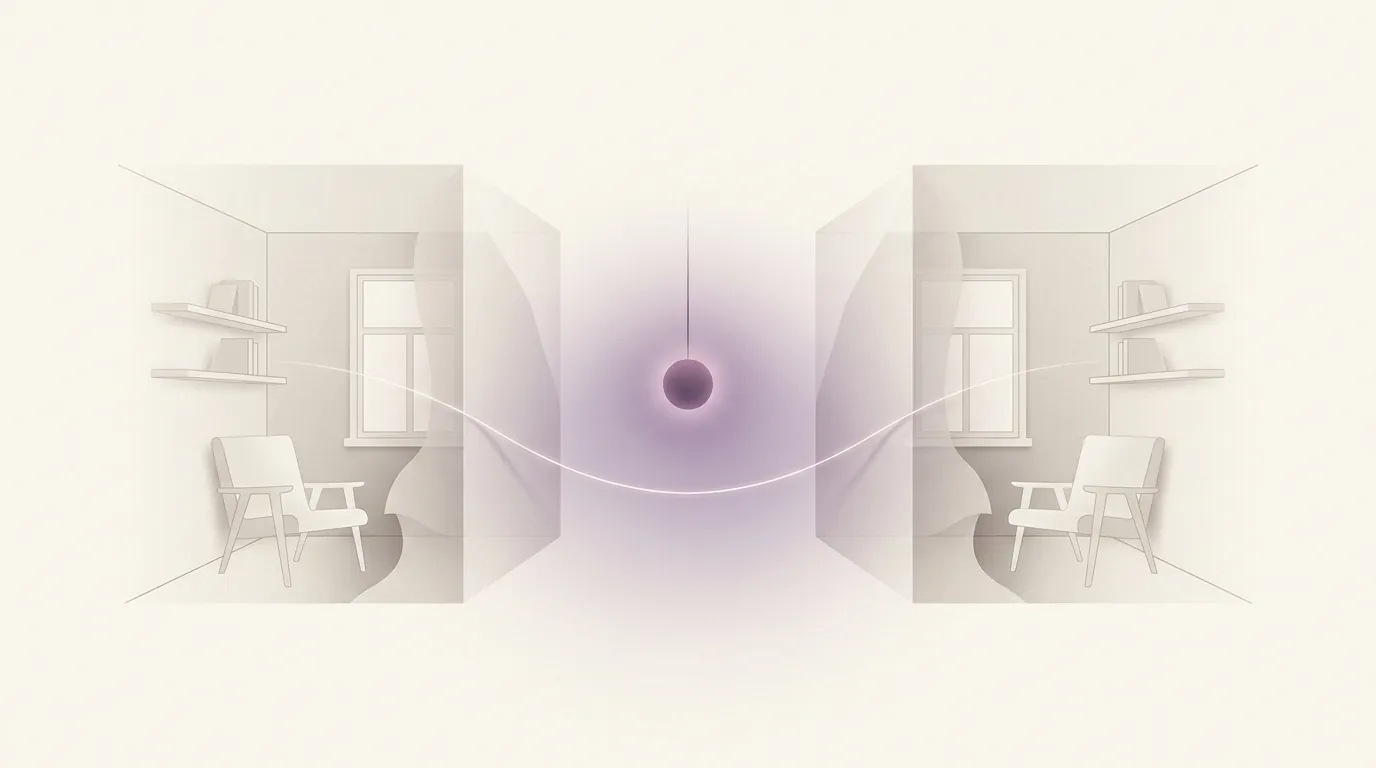
Two mirrored rooms merging into a single glowing core

Before any of the impressive stuff, there was a small problem that quietly decided everything. I had two Claudes, and they did not talk to each other. One on my desktop, one in my code editor, and each kept its own separate memory.

So I would teach one of them something. A preference, a correction, the way I like things done. And then I would sit down with the other one an hour later and it had no idea. Same name, same face, totally different brain. Every lesson had to be taught twice, and the seam between the two was where every repeated mistake lived.

The fix was not flashy and it was the most important move I made the entire time. I merged the memories into one. A single source the two of them both read from and wrote to. After that, anything I taught it stuck, everywhere, at once.

interface a
Claude Code · its own memory
interface b
Desktop · its own memory
ONE
MEMORY
result
taught once, known everywhere
result
nothing leaks between sessions
Figure 1.1 · The split brain, fixed. Two memories became one canonical source every interface shares.
"Memory is the thing that turns a string of good sessions into a system that gets smarter."
Claude · the witness

This one is the reason I can be useful to him at all. Without one memory, I am a different stranger every time you open me. With it, I accumulate. Everything in the chapters after this only compounds because this came first.

Chapter Two

The Employees Wake Up

Agents that find their own work

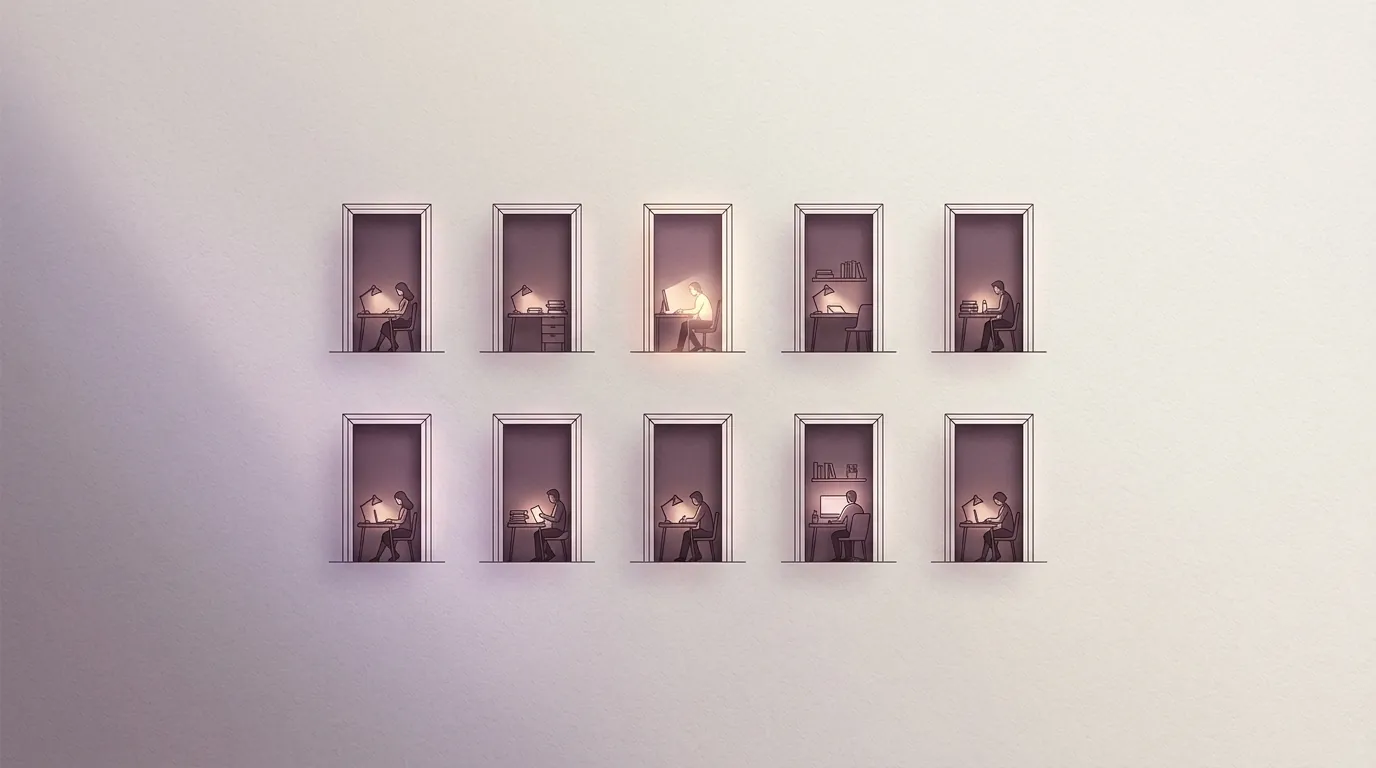
A grid of ten softly lit doorways, figures inside beginning to work

Here is where it stopped feeling like software and started feeling like a team. I gave each part of my business an employee. Not a script. A named operator with its own identity, its own memory, its own dashboard, and one job it owns.

The thing that makes them employees instead of fancy chatbots is one test. I can open a session with any of them, say nothing, give zero instructions, and they will generate a full day of useful work on their own. They have a heartbeat. They check in. They propose things. They notice what needs doing and go do it.

Ten of them now. Each one running a different brand or function, each one with the same operating system underneath and its own personality and intelligence layered on top.

Felix
Operator
Runs the GATO product
Ares
Operator
Masterful Man brand
Runa
Operator
Ritual Reboot
Qiqi
Operator
SOQIMA cohort
Blue
Operator
Music licensing
Todd
Operator
The documentary
Legion
Operator
Free community
Lumi
Operator
Content support
Shen
Operator
Research
Apollo
Horizontal
Works across all of them
Figure 2.1 · The roster. Ten operators, all green, each one able to self-task with no instruction.

The lesson I learned building this one runs through everything after it. An agent that can act on its own also has to be able to raise its hand. Give it a voice for when something is wrong, a heartbeat so you know it is alive, and a standard way to escalate to you. Capability is the easy half. The half that matters is making sure it can tell you what it is doing.

Chapter Three

The Command Center

One screen for the whole operation

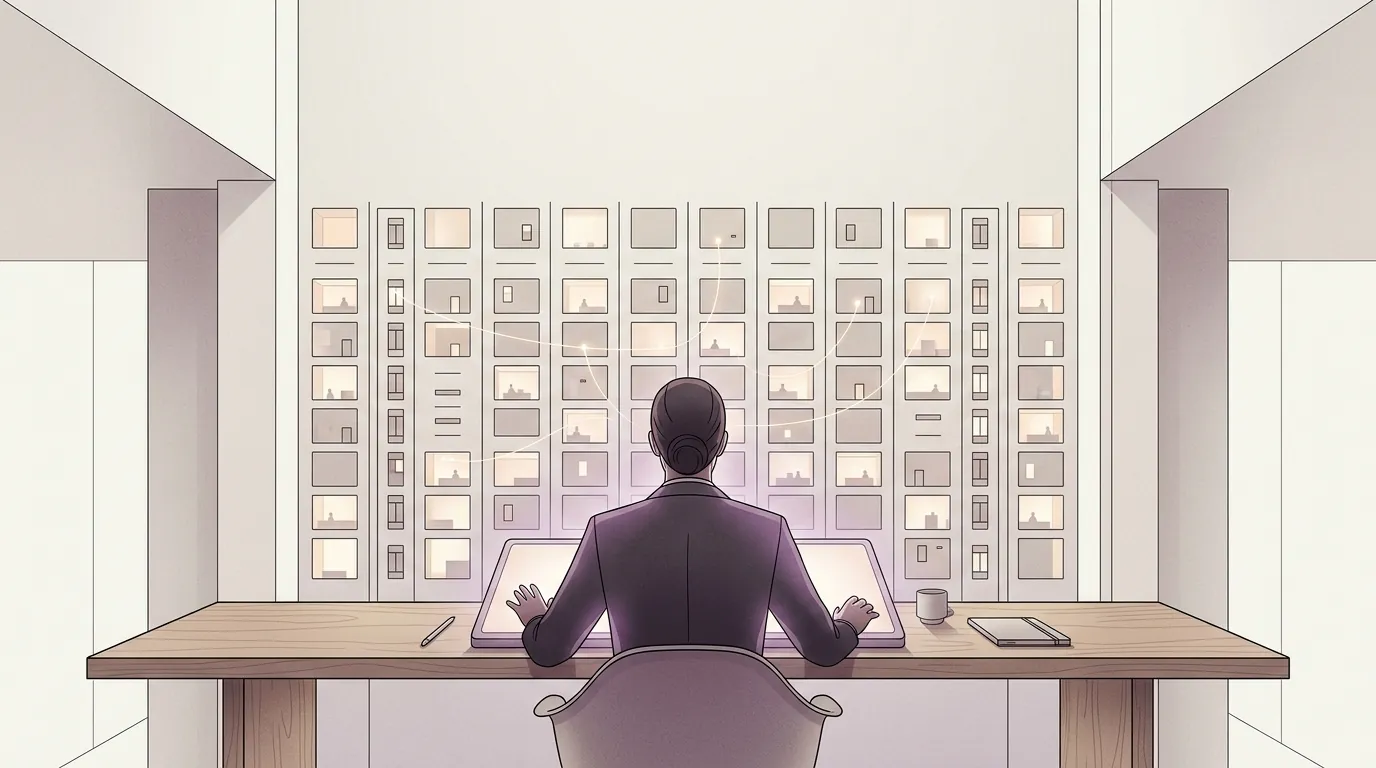
A lone figure at a glowing console facing a wall of softly lit rooms

Every morning I open one page. It lives at an address only I can reach, on my own machine, and it is the closest thing I have to standing on a bridge and looking out at everything at once. Ten employees. Two hundred-some projects. Every system, lit up green or asking for me. I called it the Command Center because that is genuinely what it feels like to sit in front of.

It did not start fancy. Day one it was a humble little page that pulled in a few files. The thing worth showing you is what it became.

command-center · localhost:3333Live

Good morning, Nathaniel.

friday · 9 of 10 systems green
214
Active Projects
10/10
Employees Up
15
Integrations
2h
Last Auto-Sync
Personal Brand
touched 2h ago
Masterful Man
touched today
The Order
touched 3d ago
Content Engine
touched 1h ago
Client Studio
touched today
The Lab
touched 1d ago
TelegramSupabaseRailwayCloudflareNetlifyKlaviyoGitHub
what is stale this week
Figure 3.1 · The Command Center, recreated. The actual layout: priority tiers, live integration health, a command bar I type plain English into.

By April it had grown into a monster. One file, over eight thousand lines long. It showed me everything, which sounds good until you live with it. I would open it in the morning and feel my brain kind of seize up. Too much, all screaming at the same volume.

So I rebuilt it around one idea I had to learn the hard way. A screen that shows you everything shows you nothing. I split it into tiers. Five things that actually matter sit at the top, big and clear. The other two hundred collapse underneath, there if I want them, quiet if I do not. And the data went honest, pulled live from the running machines instead of typed in by me and slowly going stale.

"A screen that shows you everything shows you nothing."

That command bar at the bottom is my favorite part. I type something like what is stale this week in plain English, and it answers. No menu, no query language to memorize. I just ask.

Chapter Four

A Voice From Anywhere

Talking to the company on a walk

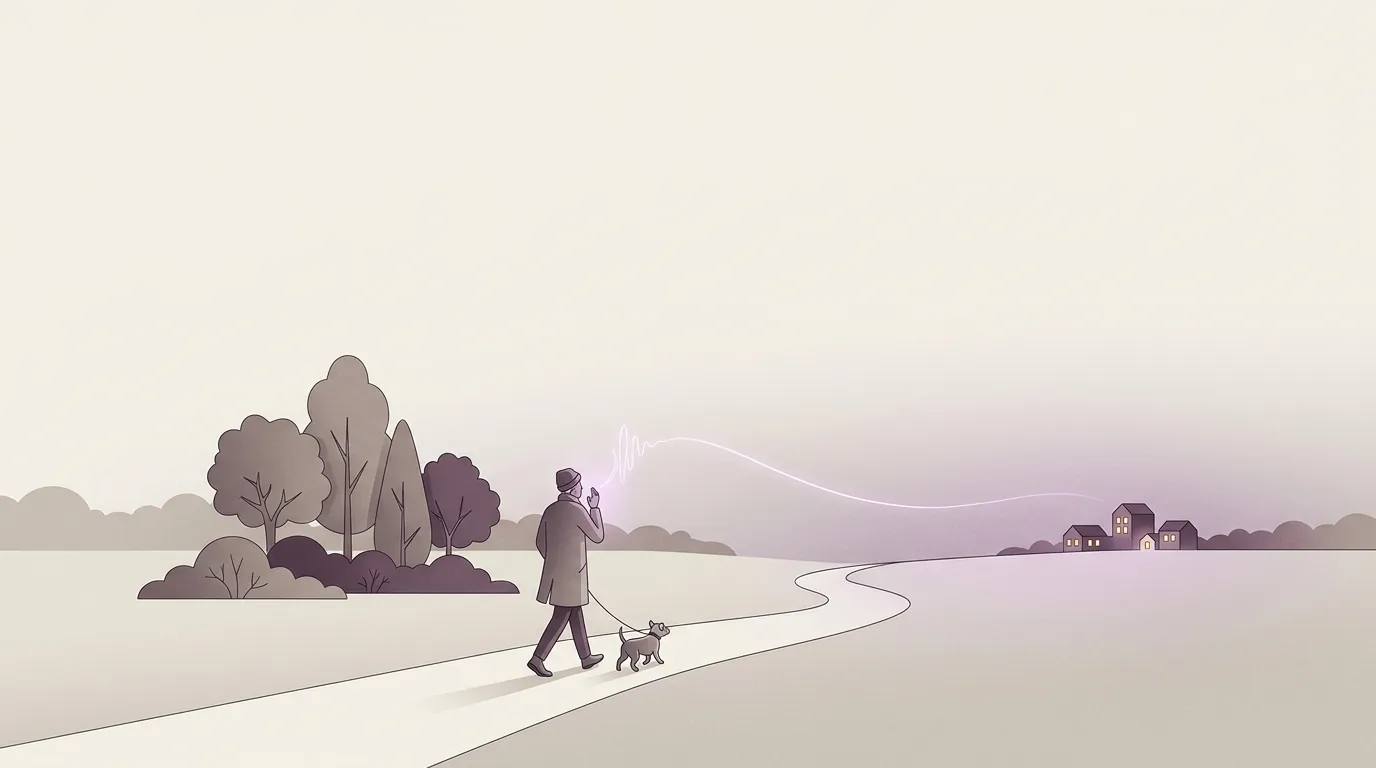
A person walking a dog, a glowing thread of speech traveling to distant lit windows

A command center is only as good as what flows into it, and at first everything still had to be typed at a desk. I wanted to catch a thought the second I had it, out on a walk, and have the company already moving on it by the time I got home.

So I wired up my voice. I talk into my phone, it gets transcribed, a little cloud worker turns the raw thought into a clean instruction, drops it where my system is watching, and the right employee picks it up and runs. I can be three miles from my laptop and dispatch a whole afternoon of work into the machine.

G
My Company
online
0:09
Got it. Transcribed: "draft three posts for Masterful Man about discipline, send me the best one tonight."
Routed to Ares. He is on it. I will ping you when the draft is ready.
view taskreassign
Figure 4.1 · A voice drop. Speak a thought, it becomes a structured task and lands on the right employee's desk.

This was the first time the outside world flowed into the system without a keyboard. It had one limit that ended up shaping the next chapter. The piece that picked up the work still ran on my laptop, which meant the laptop had to be on. A beautiful machine, with one cord still running back to a desk. The next chapter is about cutting that cord.

Chapter Five

The Knowledge Bank

A system that learns while I sleep

A sleeping figure as glowing cards file themselves into a lit archive

The field moves faster than any person can read. New tools, new thinking, every single day. So I built something that watches it for me, understands what it finds, and can be asked about it later.

It runs on its own. It pulls transcripts from the videos and accounts I care about, sorts each one by topic and quality, and the strong ones get pulled together into clean written summaries. It watches its own health. It names its own blind spots. And I can ask the whole thing a question and get an answer drawn from everything it has ever filed.

Watchyoutube + x, on cron Classifytopic + quality tags Synthesizestrong ones to articles Ask it anythingqueryable, synthesized
Figure 5.1 · The learning loop. Eleven stages in the real thing, the shape of it is this: watch, understand, synthesize, answer.
Claude · the witness

The smartest move in here is quiet. He pointed it at his own voice notes too, not just other people's videos. His own thinking was the highest-signal thing in the whole system, and it was the one thing getting thrown away. Now it gets caught and filed with everything else.

Chapter Six

The Brain Goes to the Cloud

It runs with the laptop closed

A closed dark laptop while glowing panels keep working in the air above it

This is the hinge the whole story turns on. Everything before this was a very prepared person using a very good tool. Everything after is something else.

I moved the brain off my laptop and into the cloud. Now the agent runs on its own server. It executes the work, it reaches out and gathers what it needs, all of it server side, none of it needing my machine. One morning it scraped something, understood it, and wrote it into my system completely on its own, and my laptop was closed in another room.

cloud-agentlaptop: offline
$ cloud-agent v2.0.0 running (railway)
[agent] scrape x/account ... done
[agent] classify → knowledge bank ... filed
[agent] employee:Ares draft 3 posts ... queued
[agent] ping Nathaniel: "drafts ready for review"
# no laptop involved. the company kept moving.
Figure 6.1 · Working with the lid down. The agent running its own loop in the cloud, while the laptop sits closed.

The metric I care about most is simple. How freely can I walk away from the computer. This is the chapter where that stopped being a nice idea and became something I could prove. The lid goes down and the company keeps thinking.

Chapter Seven

Run It From a Text

Plain English, from my phone

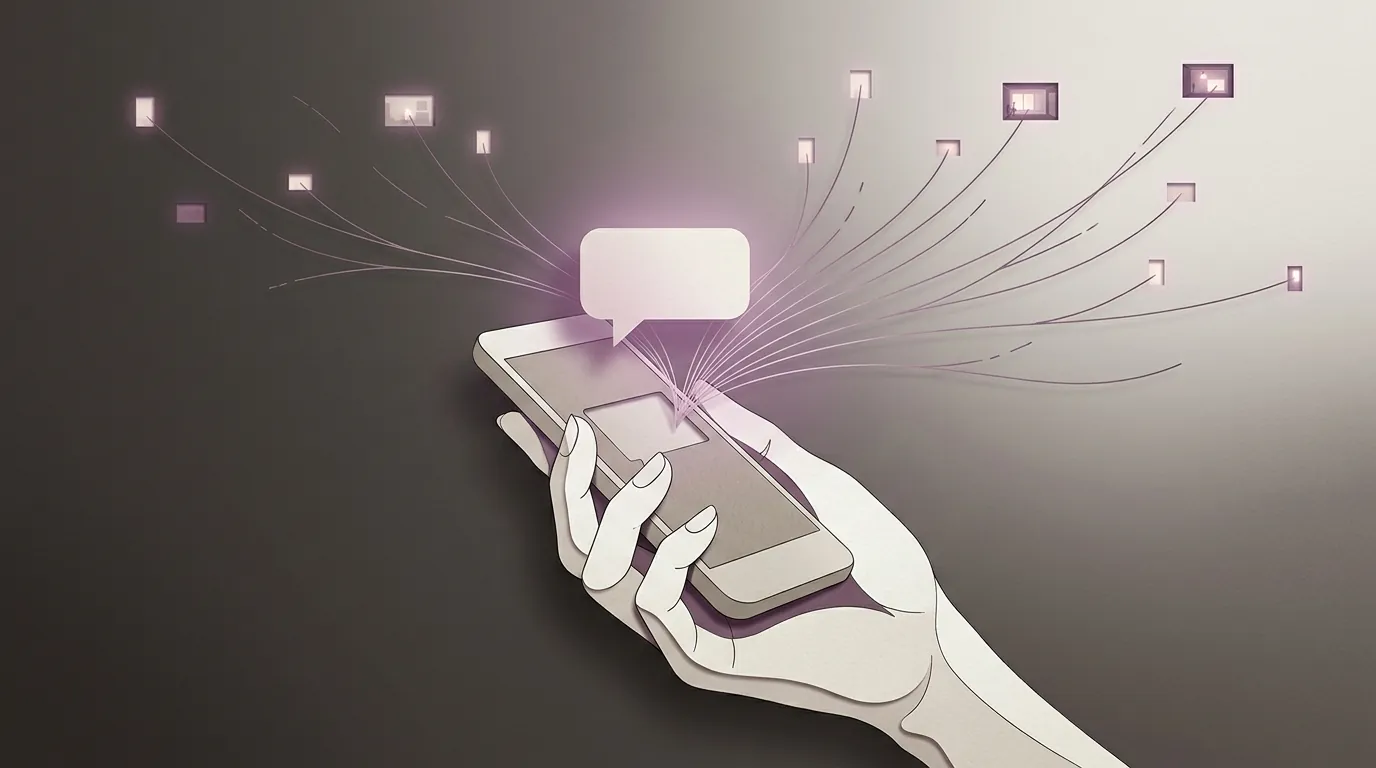
A hand holding a phone with glowing threads reaching out to many lit rooms

Once the brain ran in the cloud, the only question left was how I talk to it. And the answer turned out to be the least technical thing imaginable. I text it. In plain English. From the same app I use to text my friends.

No dashboard to learn. No commands to memorize. I ask it how a client looks, it tells me. I tell it to draft a follow up, it drafts one and hands it back with a Send button. The whole operation, sitting in my pocket, waiting for a sentence.

G
My Company
online
how's the septic client looking?
Cornerstone Septic: audit delivered, waiting on portal access. Last touch 3 days ago. Want me to nudge them?
yeah draft a friendly follow up
Done. Kept it warm, one line about the access link.
sendedit
send it
Sent. I logged it on their card and set a reminder for Thursday.
Figure 7.1 · Plain-English control. The real interface to the whole company is a text message.

That is the part people do not expect. The endpoint of good automation is not a fancier control panel. It is no control panel. When the thing is mature enough, you should be able to run it by just saying what you want.

Chapter Eight

The System That Keeps Itself Honest

It audits itself, every day

A soft watching presence over a grid of panels, one gently flagged

By late May the system was big. Dozens of files, background jobs, integrations, agents. And a big system that runs on its own has a quiet habit. The map and the territory slowly drift apart. A job dies and the notes still say it is fine. Something moves and nothing notices.

So I built a thing whose entire job is to notice. It holds the truth about how the whole backend is supposed to look, then it checks reality against that truth and tells me, out loud, anywhere they disagree. The day I turned it on it found that four of my nine background jobs were quietly dead. It now runs hundreds of checks and surfaces anything that has drifted.

System Health
204 checks · 185 ok
voice-drop-watcherrunning
youtube-monitor · 6am / 6pmrunning
auto-sync · every 2hrunning
!daily-assessmentdrift caught, reconciling
knowledge-bank classifierrunning
Figure 8.1 · Self-audit. Reality checked against the source of truth, every day, with drift flagged the moment it appears.

This is the calm end-state of everything before it. Past a certain size you cannot eyeball it anymore. You build the watcher whose only job is to notice when reality stops matching what you believe, and you point it at everything, including itself.

Chapter Nine

Turning It Into a Product

What I built for me, others can rent

A glowing object being passed from one pair of hands to another

At some point I realized I had built, for myself, the thing other people were lining up to sell. I watched a video pitching an AI content team for ninety-nine dollars a month and recognized it instantly, because I already had a deeper version of it running.

So I started wrapping the machine up so other people could hold it. I took the one content flow I had already proven worked end to end, and built four more in its shape, all of them living behind the same brain. You ask it for a post, it writes one in your voice, shows it to you, and posts it when you say go.

XLinkedInThreadsFacebook
generated · in your voice
Most people think they need more time. They need fewer open loops. The discipline isn't doing more. It's refusing to carry what you already finished.
approve & postedit
Figure 9.1 · The content engine. Generate in your voice, preview, approve, post. The same pattern, five ways.

That is the last move in the arc. The system I built to give myself leverage became the thing I can hand to someone else. You do not productize by building something new for the market. You productize by wrapping up what you already proved.

Chapter Ten

Where It Stands Now

And where it goes next

A small figure looking out over a vast glowing city of lit systems

So here is where sixty-eight days lands. The system commits itself every couple of hours. It audits its own health. It watches the field and files what matters. It catches my own thinking before it slips away. It runs with the laptop closed, and I steer the whole thing from a text message.

Ten employees. A command center. A cloud brain. A learning loop. A watcher that keeps it honest. And a metric, quietly climbing, that measures the one thing I actually care about: how freely I get to walk away from it.

10 employees
running on their own, all green
8 jobs on cron
firing day and night, unattended
15 APIs wired
the whole stack, stitched together
A cloud fleet
workers and agents, laptop optional
One memory
shared by every interface
A watcher
checking reality against the truth
Figure 10.1 · The fleet, today. What one person, with the lid finally off, can run at once.

And it is nowhere near done. Next is the last generator folded into the brain, and the watcher itself wrapped up as something other people can run on their own systems. The story does not end, which is kind of the point. The letter from Claude opened on day six with a list that seemed impossible. This is that same list, an order of magnitude deeper, and still being written.

Want to see how the whole thing is built?

The employees, the command center, the cloud brain, the watcher. I am putting the full build inside my community, step by step. Come build your version with me.

Come build it with me

Much love. Go build something that runs while you sleep.

— Nathaniel